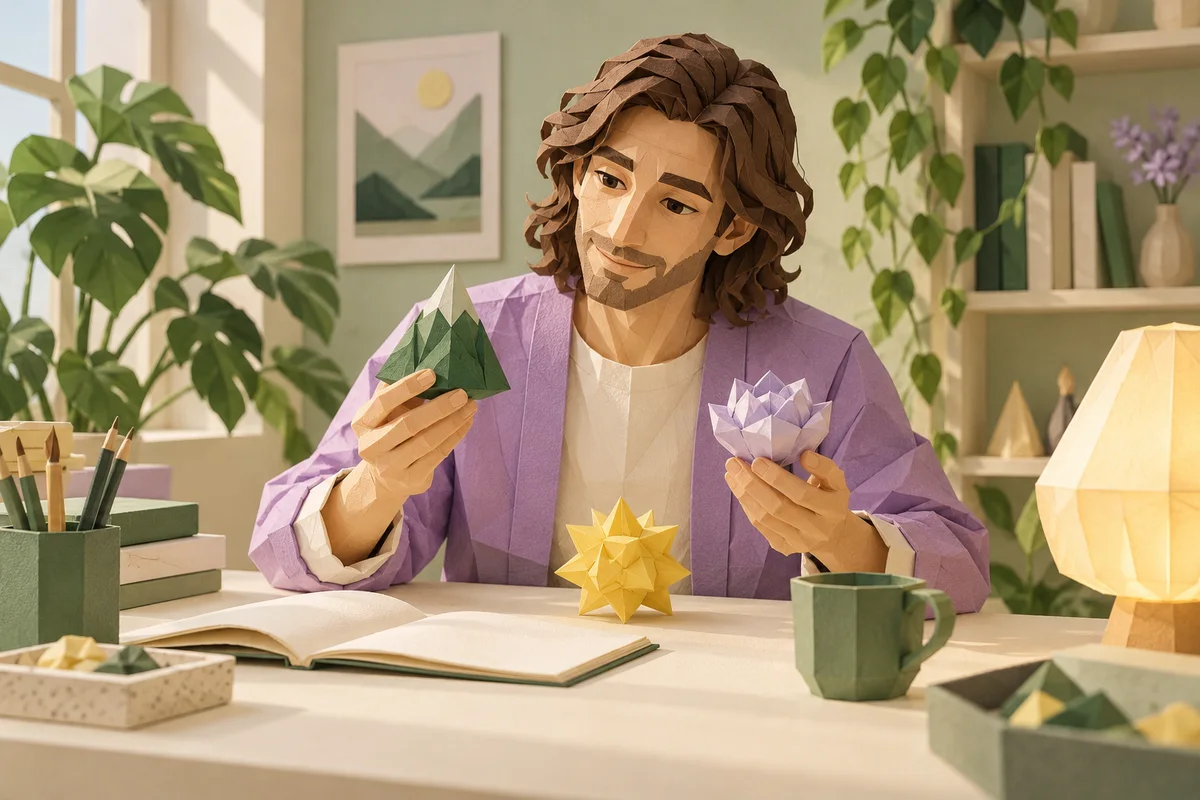
The gap between an inner idea and its first expression can disappoint. Yet an imperfect version gives you something to examine and improve. You can preserve the intention while allowing its form to develop through the work.
Identify the core you want to preserve
For a text or illustration, describe the intended question, atmosphere or experience in one sentence. Separate this core from production details. An introduction, colour or format can change without losing the intention. The distinction helps you prioritize corrections that genuinely matter.
Make a small enough version
Create one scene, page or example instead of a whole collection. Give it a defined working period. The result reveals what exists and what is missing; it does not settle your creative ability once and for all. Enjoyment and material constraints belong in the assessment too.
Ask about the effect on the recipient
Share the fragment with a precise question: what does the reader understand, what feeling comes through or where do they lose the thread? Avoid asking whether it perfectly represents you. Feedback concerns a piece of work, not your whole person. This may help if INFP resonates, without becoming an obligation of the type.
Continue exploring: INFP: understand Fi and Ne through a practical choice.
Try it in practice
Create a fragment in one session and write its intended effect. Ask someone to describe what they receive before showing that sentence. Compare the accounts and choose one change that brings the effect closer to your intention.
THE INFP COLLECTION
Five perspectives to explore
- INFP: understand Fi and Ne through a practical choice
- INFP: make studying meaningful without waiting for inspiration
- INFP: disagree without having to justify your whole identity
- INFP: choose between two options that both fit your values
- INFP: move a creative project forward before it perfectly matches your vision